Table of contents
A Saudi data center developer holds powered land, a gigawatt ambition, and a Vision 2030 tailwind. What the developer rarely holds yet is a signed hyperscaler and a lender ready to fund the build. In the Kingdom, capacity is committed years before it energizes, so the campus has to be sold before it exists, and to a small set of buyers who will not fly to a desert site to read a PDF.
Data center marketing in Saudi Arabia is the discipline of generating tenant and investor demand for Saudi data center capacity. Its highest-stakes form is pre-lease marketing: using positioning, visualization, and a leasing gallery to present a NEOM-era campus that does not exist yet, so hyperscalers and Vision 2030 investors commit before construction.
That pre-lease job is where a Saudi campus actually gets filled, and it is the part almost no marketing playbook covers, least of all for this market. This guide does.
What Is Data Center Marketing in Saudi Arabia, and How Is It Different From a US Pre-Lease Playbook?
It is the work of winning tenants and capital for Saudi data center capacity, and it runs on a different set of rules than a US campaign. The core discipline is the same as the general data center marketing motion: position a campus, prove it before it exists, and pre-lease its capacity to anchor tenants and investors. What changes in the Kingdom is who holds the money, what the buyer weighs, and how a deal moves.
Four differences reshape the playbook for a Saudi campus:
- The capital is sovereign. The Public Investment Fund and its vehicles sit behind much of the demand and much of the money, so a campaign markets to sovereign-linked investors and state-backed AI buyers, not only to private funds and enterprise tenants.
- The buyer set is concentrated. A handful of hyperscalers, a few sovereign AI companies, and the local operators account for most of the addressable capacity, so account-based marketing to named buyers matters more than broad demand generation.
- The mandate is national. Vision 2030 and a cloud-first, data-residency agenda create the demand for in-Kingdom capacity, so alignment with the national program is part of the pitch, not background color.
- The deal is cross-border and bilingual. The people who evaluate a NEOM-era campus sit in Riyadh, Seattle, and Davos, and the program runs in English and Arabic across a longer, relationship-led sales cycle.
Hold those four in mind and the rest of this guide is the general pre-lease discipline, re-tuned for the Kingdom.
Why Vision 2030 Turns a Saudi Data Center Into a Marketing Problem Before an Engineering One
Because the Kingdom is committing capacity years ahead of the tenants and the money, and a signed anchor, not a finished shell, is what unlocks the build. The Saudi data center market is climbing from about USD 2.43 billion in 2025 to USD 2.91 billion in 2026, and on toward USD 8.85 billion by 2034 at a 14.93% compound rate (IMARC Group, 2026). The engineering is hard, but the binding early question is commercial: who signs.
The demand is real, sovereign-backed, and already contracted in gigawatts long before energization.
- Vision 2030 scale. Projects across the Kingdom have reached about USD 1.3 trillion in value (Gulf News, 2026), the backdrop that makes data center capital flow.
- A flagship campus. DataVolt and NEOM signed a USD 5 billion agreement for a 1.5 GW net-zero AI campus in Oxagon, powered entirely by renewable energy, with phase one expected to operate in 2028 (Data Center Dynamics, 2026).
- A sovereign AI buyer. HUMAIN, the Public Investment Fund’s AI company, is targeting roughly 6.6 GW of capacity by 2034, with a USD 1.2 billion package arranged with the National Infrastructure Fund to build 250 MW.
- Hyperscalers committing in-Kingdom. AWS is building a dedicated Saudi region backed by more than USD 5.3 billion, launching by December 2026, in part to serve customers who need their data held inside the Kingdom (AWS, 2026).
Data residency is the quiet engine under all of it. A cloud-first policy and in-Kingdom data rules push regulated demand onto Saudi soil, which is why hyperscalers are landing local regions rather than serving the country from abroad. For a developer, that reframes the job. The campus that a hyperscaler and a Vision 2030 investor can evaluate first is the one that wins the anchor first, and the anchor is what turns a land-and-power position into a financeable asset. The full buildout and visualization mechanics sit in the companion Saudi Arabia digital twin guide; this one stays on the marketing program.
How to Map the Buyers Who Decide a Saudi Data Center Deal
Start by naming the rooms, because a NEOM-era campus is evaluated by four very different buyers and each weighs a different thing. A hyperscaler’s site-selection team weighs power and design. A sovereign-linked investor weighs the asset. A state AI buyer weighs national capacity. The advisors between them weigh whether the campus makes the shortlist at all. One message to all four converts none of them.
The table maps each buyer to what they weigh and where you reach them.
| Buyer | What they weigh | What convinces them | Where you reach them |
|---|---|---|---|
| Hyperscaler site-selection team | Secured power, time-to-energization, connectivity, rack density and cooling | A walkthrough of the powered shell and their own hall at real scale | ABM to named accounts, LEAP and industry events, in-Kingdom region and RHQ conversations |
| PIF-backed or sovereign-linked investor | The campus as a fundable asset: anchor, tenor, delivery risk | A campus view tied to its power, connectivity, and lease story | Investor decks, a data room, sovereign and institutional relationships |
| Sovereign AI buyer (HUMAIN and similar) | National AI capacity, timing, energy | Capacity, phasing, and a ready-to-energize power position | Direct engagement, government and PIF-linked channels |
| Site-selection advisors and consultants | Whether the campus belongs on a tenant’s shortlist | A credible technical package and a legible campus | Advisor enablement, broker and consultant briefings |
The point of the map is sequencing, not just a cast list. You cannot reach the hyperscaler without the advisor, and you cannot close the investor without the anchor the hyperscaler provides. Build one asset each buyer can read, then run the campaign in the order the deal actually moves.
How to Position a NEOM-Era Campus So Hyperscalers and Investors Both Commit
Lead with power, then prove readiness. In Saudi Arabia the strongest part of almost any campus pitch is energy, because a secured, ready-to-energize power position is scarcer than land and slower than construction. Position the campus on what a hyperscaler and an investor both need to believe: that the megawatts are real, the timeline holds, and the site fits the national program.
Five positioning moves carry a Saudi campus:
- Put the power story first. Name the secured capacity, the interconnection, and the on-site renewables. A dedicated gigawatt of renewable power, as at Oxagon’s 1.5 GW net-zero campus, answers the first question a serious hyperscaler asks.
- Make net-zero a commercial claim, not a badge. Renewable power aligns with tenant ESG mandates and with the Kingdom’s own net-zero targets, and in the Gulf it also reads as lower, more predictable operating cost.
- Sell the connectivity. Subsea-cable routes and low-latency paths to Europe, Africa, and Asia are part of why a global tenant would place capacity here rather than elsewhere.
- Frame the data-residency fit. A campus that lets a hyperscaler serve regulated Saudi demand from inside the Kingdom is answering a mandate, not just offering space.
- Anchor to Vision 2030. Tie the campus to the national digital-economy program, because sovereign-linked capital underwrites projects that advance it.
Position once, at the top, and every later asset inherits it. The film, the walkthrough, and the leasing gallery should all tell the same power-and-readiness story, so the campus a tenant sees in the first meeting is the campus the investment committee underwrites in the last.
How to Build a Go-to-Market That Pre-Leases Capacity Before Construction
Run the program in the order the deal closes: define the buyer and the power position, build proof the buyer can evaluate, then take it to a concentrated, sovereign-linked market and drive toward a signed anchor. The six steps below move a Saudi campus from a site plan to a letter of intent, and each one feeds the next.
- Fix the target and the power position. Name the anchor tenant you are built for, the secured capacity and timeline, and the one advantage this campus holds over its shortlist rivals. Every later asset inherits this.
- Build the proof assets. Photoreal CGI, an interactive walkthrough, a digital sales gallery, and an investor data room, so a hyperscaler and a fund can evaluate the campus at real scale before it is built.
- Stand up a bilingual presence. A developer website, a technical spec package, and content tuned for search and generative engines, in English and Arabic, so the campus surfaces when a site-selection team or an advisor researches Saudi capacity.
- Run account-based outreach to a named list. Target the specific hyperscaler site-selection teams, sovereign AI buyers, and PIF-linked investors that can take the capacity, and enable the advisors who build their shortlists.
- Show up where Gulf deals are seeded. Use LEAP and the Kingdom’s flagship technology and investment events, sovereign and government relations, and regional-HQ conversations as the rooms where these introductions actually happen.
- Operate the leasing funnel to financial close. Track which buyer reviews which suite on a CRM, move each opportunity from qualified tour to letter of intent to signed lease, and measure against the preleased share that unlocks the debt.
Run these in order and the proof assets carry the position into every room. Run them out of order, with outreach before there is anything credible to show, and each channel spends attention the campus cannot yet convert.
How to Reach a Concentrated, Sovereign-Linked Buyer Set
Concentrate the spend, because the Saudi buyer set is small enough to name. This is not a market where broad demand generation fills a campus. A short list of hyperscalers, sovereign AI companies, and institutional investors controls most of the addressable capacity, so the channels that matter are the ones that reach named accounts and the advisors around them, in both languages.
The channels that actually move a Saudi campus:
- Account-based marketing to named buyers. Direct, researched outreach to specific site-selection teams and investment desks beats any volume campaign when the whole market is a few dozen decision-makers.
- Flagship events. LEAP, the Kingdom’s flagship technology event, opened its 2026 edition with more than USD 15 billion in technology investments and partnerships announced(Telecom Review, 2026), and it is where many of these introductions begin. Regional AI and cloud summits carry the rest.
- Sovereign and government relations. With PIF-linked capital and national programs behind the demand, the campaign has to speak to state stakeholders, not only to commercial tenants.
- Advisor and broker enablement. Site-selection consultants assemble the shortlists a tenant ever sees, so equipping them with a credible package is often the first sale.
- English and Arabic content. A bilingual technical and investor narrative, tuned for search and generative engines, is what makes the campus legible to a cross-border buyer researching the market.
- The connectivity and regional-HQ narrative. Tie the campus to subsea routes and to the reasons global operators are placing regional headquarters and capacity in the Kingdom.
The distinction that matters is between attention and commitment. Events and content get a campus onto a shortlist. What signs an anchor is the asset a site-selection team and an investment committee can walk before the building exists, which is where visualization comes in.
How to Turn Visualization Into the Asset That Closes a Cross-Border Gulf Deal
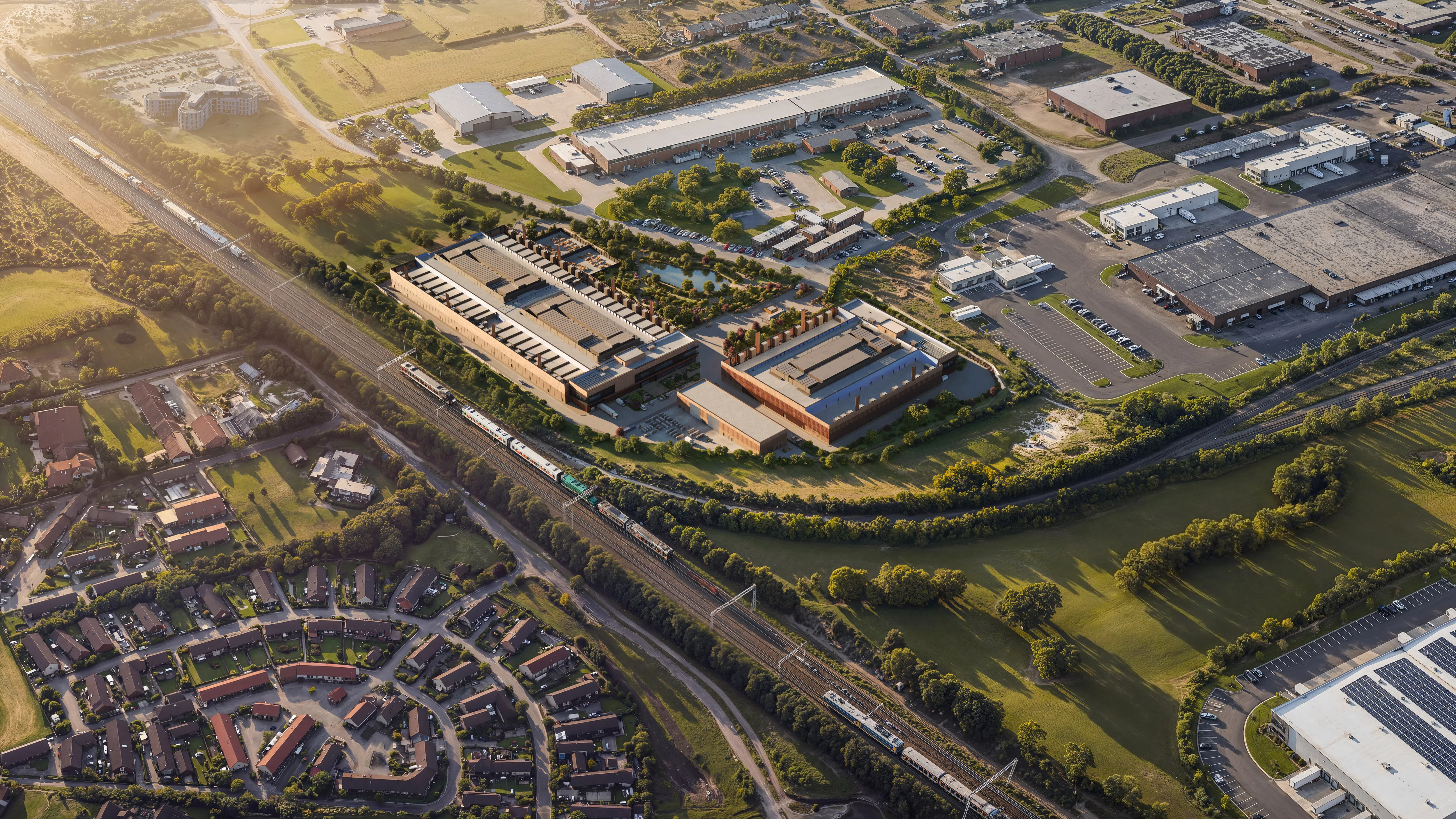
Give each buyer a version of the campus they can evaluate without leaving their desk. The buyers deciding a NEOM-era deal are rarely in the same country, and none of them will visit a field and a substation to judge a facility. A cinematic film, an interactive walkthrough, and a leasing gallery let a hyperscaler in Seattle, an investor in Davos, and a sovereign buyer in Riyadh read the same campus at real scale, months before there is anything to tour.
The asset carries the argument in three moves:
- A cinematic pass opens the first conversation, the campus set against its renewable power and subsea connectivity, the story that earns a second meeting.
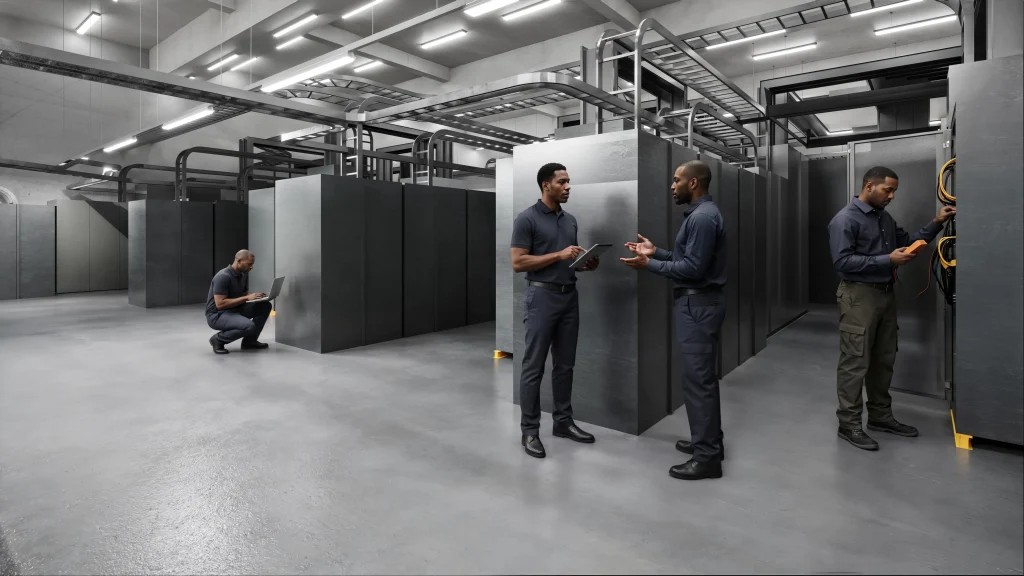
- An interactive walkthrough turns interest into evaluation. A tenant’s engineers navigate the powered shell and their own hall, reading white space, ceiling heights, and the routes for power and cooling at real scale, which is how “we think it fits” becomes “we can see it fits.”
- A digital leasing gallery closes it, holding available suites, megawatts, the site plan, and status on one link the buyer’s committee returns to, tied to a CRM so the team sees who is reviewing which hall and when they are ready to sign.
The full pipeline, how a Revit or CAD model becomes a walkable real-time scene, sits in the Saudi Arabia digital twin guide and the general 3D data center visualization pillar. One line stays fixed no matter how good the visualization looks. This is the marketing and leasing layer, built to make the power path, the cooling design, and the rack density legible so a tenant can read what the engineers specified. It is not operational infrastructure management, and it does not run computational fluid dynamics, thermal analysis, or live capacity monitoring. Those belong to the operational digital twin, a separate tool built after the facility opens, and a marketing partner that blurs the line is overselling.
How to Measure a Saudi Data Center Marketing Program
Measure toward financial close, not toward traffic. The metric that decides whether a Saudi campus gets built is the preleased share of its capacity, because in a Kingdom data center deal the anchor lease is the security behind the whole capital stack. Lenders underwrite contracted cash flows, not forecasts, and a single investment-grade or sovereign-linked tenant covering 60 to 80 percent of day-one capacity is the largest determinant of whether the project can be financed.
The Kingdom already has the worked example, and it sets the bar a program is judged against.
- The benchmark. DataVolt’s Riyadh East facility reached financial close after HUMAIN anchored 36 of the site’s 44 MW, roughly 82 percent of capacity, which let banks fund about three-quarters of the project cost
- The lagging metrics that matter. Megawatts committed, the preleased share of the campus, and time-to-financial-close are what convert a program into a construction loan.
- The leading indicators. Qualified site-selection tours, engagement with the walkthrough and the data room, requests for proposals, and investor meetings tell you the program is reaching the right rooms before the commitments land.
- The capital yardstick. At a global benchmark near USD 11 to 14 million per megawatt (Consultancy-ME, 2026), a gigawatt of announced capacity implies tens of billions in capital, none of which moves until an anchor signs.
Judge the program on the share of the campus committed and the speed to close, and the vanity metrics fall away. Interest that never opens the walkthrough or the data room is not yet a qualified tour, and a campaign that reports reach instead of preleased megawatts is measuring the wrong thing.
Where Fortes Fits: The Pre-Lease Marketing Layer, Built in One Studio for Gulf Developers
Fortes Marketing builds the marketing and pre-lease layer as one studio, in-house, so data center developers courting hyperscalers and Vision 2030 investors can lease capacity and raise capital before the slab is poured. That layer is photoreal CGI, a cinematic film, an interactive real-time Unreal Engine walkthrough a tenant or investor navigates on a screen or in a headset such as Meta Quest 3, a digital sales gallery, a developer website, and the brand that ties them together. It is the one studio that replaces three vendors: a CGI studio, a web agency, and a branding designer.
The mechanism is what makes the speed possible. Because the renders are produced in-house, the leasing gallery is built from the same model, so the campus a tenant sees in the CGI is the campus they walk in the gallery, and consistency is structural rather than a coordination cycle. The gallery ships in 5 weeks. When a developer supplies an existing 3D model, Fortes integrates it into a finished environment at a lower rate, so the path from geometry to a leasing asset is faster the more you bring. It is one pre-construction marketing system, not a stack of separate contracts to reconcile across time zones.
On scope, Fortes is exact. It builds the experiential and marketing layer, not operational DCIM, and there is no computational fluid dynamics, thermal, power, or cooling simulation here, because a data center developer needs both layers, from different partners, for different reasons. Pricing is scoped to the campus, at higher-end production quality on a mid-market budget. As a reference:
- Campus CGI views: typically start around $1,200–$2,500 each.
- Additional angles within an existing scene: around $450–$540 each.
- The interactive real-time walkthrough: from about $20,000 for a single building into six figures for a large complex.
- A supplied 3D model: integrated at a lower rate than building the geometry from nothing.
Exact numbers depend on the campus, the asset set, and how much of your own model you bring.
The Saudi campus that wins its anchor is the one a hyperscaler can walk and a Vision 2030 investor can underwrite before the concrete is scheduled, marketed to a named buyer set in the rooms where Gulf deals are made.