Table of contents
A data center operator with a site, a power position, and a construction schedule faces a commercial fact before the first pour: most of the capacity has to be spoken for before the building exists. In primary US markets, 80.4% of capacity under construction is already preleased. The lease comes first. The concrete follows.
Data center marketing is the discipline of generating tenant and investor demand for data center capacity. Its hardest and highest-stakes form is pre-lease marketing: using positioning, visualization, and a leasing gallery to present a campus that does not exist yet, so anchor tenants and capital partners commit before construction.
That pre-lease job is where capacity actually gets filled, and it is the part of the discipline almost no marketing guide covers. This guide does.
What Is Data Center Marketing, and How Is Pre-Lease Marketing Different From Colocation Demand Gen?
Data center marketing spans two different jobs. One markets an operating business, a colocation or cloud provider selling space in facilities that already run. The other markets a specific pre-construction campus, to pre-lease its capacity before it is built. Most published playbooks cover only the first.
The established discipline is a demand-generation motion. It centers on search and generative-engine visibility, technical content and thought leadership, public relations and analyst relations, account-based marketing to enterprise accounts, and presence at the industry’s events. It fills a sales pipeline for a running business, and it does that well.
Pre-lease marketing answers a different question. There is no operating facility to sell and no live pipeline to nurture, only a site, a power position, and a plan. The work is to make a campus that exists on paper legible and credible to the small set of tenants and investors who commit years before delivery. The demand-gen channels still matter, but the asset that converts is the one that lets a tenant and a lender evaluate the building before it stands. Confuse the two motions and a developer buys a content program when the project needs a leasing tool.
Why Do Operators Have to Market Capacity Before the Building Exists?
Because the commitments that make a project bankable happen years before it opens. Capacity is preleased ahead of delivery, North American vacancy sits at a record-low 1.4%, and 80.4% of primary-market capacity under construction is already spoken for(CBRE, 2026). The operator who shows the facility earliest wins the anchor tenant earliest.
The anchor lease is the security behind the whole capital stack. It underwrites construction debt and joint-venture equity, and it increasingly backs the bond market, where data center asset-backed securities grew from $2.4 billion in 2020 to $15.5 billion in 2025, prompting the SEC to ease securitization rules for the asset class in 2026(Bloomberg via Yahoo Finance, 2026). Those bonds are backed by long leases to a small set of investment-grade tenants. Which makes the lease itself the product marketing has to sell.
Timing forces the issue. Power delivery, not construction, is the binding constraint. A 100 MW grid connection can take up to 7 years in Northern Virginia and roughly 4 years on the national average, against a shell that builds in 18–24 months. An operator marketing that far ahead is not early. They are on schedule.
How to Map the Audiences a Data Center Campaign Has to Convince
A pre-lease campaign markets to four rooms, and each weighs a different thing. Tenants weigh fit, capital partners weigh delivery risk, and the brokers and site-selection advisors between them weigh whether the campus belongs on a shortlist at all. One message to all four converts none of them.
Hyperscale and enterprise tenants decide through site-selection teams, and their questions are technical before they are commercial: secured power and time-to-energization, connectivity and latency, and whether the hall supports their deployment. Average rack power has climbed to about 27 kW in 2026 and AI-native racks run far higher, yet only about one in five operators say they are ready for the 50–70 kW racks now common in AI deployments. A tenant will not commit tens of megawatts to a facility it cannot verify supports that envelope.
Capital partners weigh the team, the site, and the lease. Their concern is delivery risk: whether this operator can build the campus it is drawing and sign the tenants it is promising. Brokers and site-selection advisors are the gatekeepers who assemble the shortlist a tenant ever sees, so marketing that ignores them never reaches the tenant at all. Name the four audiences first, then build assets that answer each one’s specific question rather than a single brochure that answers none.
How to Build a Data Center Marketing Strategy That Fills Capacity
Start from the campus’s position, build proof a tenant can evaluate before it exists, then run targeted outreach into a leasing funnel you can measure. The sequence below moves from a blank site to signed letters of intent, and each step feeds the next.
- Position the campus. Name the target tenant, the power, connectivity, and timing advantage, and the one thing this campus does that its shortlist rivals do not. Every later asset inherits this.
- Build the proof assets. Photoreal CGI, an interactive walkthrough, a digital sales gallery, and an investor data room: the tools that let a tenant and a lender evaluate the facility before it is built.
- Stand up the digital presence. A developer website, a technical spec package, and content tuned for search and generative engines, so the campus surfaces when a site-selection team researches the market.
- Run targeted outreach. Account-based marketing to named hyperscale and enterprise site-selection teams, broker and site-selection enablement, public and analyst relations, and presence at the industry’s events.
- Operate the leasing funnel on a CRM. Track which tenant reviews which suite and how often, and move each opportunity from qualified tour to letter of intent to signed lease.
- Measure against preleased capacity. Judge the program by the share of the campus committed and the progress toward financial close, not by traffic.
Run these in order and the proof assets carry the position through every channel. Run them out of order, with outreach before positioning or a website before there is anything credible to show, and each channel undercuts the last.
How to Choose the Channels That Actually Fill Data Center Capacity
Not the ones most guides lead with. For a pre-construction campus, the channels that convert are the ones that let a tenant and an investor evaluate the facility years early: experiential visualization and a leasing gallery first, with brand, PR, account-based marketing, and events feeding them. The table below maps each channel to the audience it reaches and the funnel stage it serves.
| Channel | What it does | Primary audience | Funnel stage |
|---|---|---|---|
| Positioning & brand | Defines who the campus is for and why it wins | All four audiences | Foundation |
| Experiential visualization (CGI + walkthrough) | Lets tenants and investors evaluate the facility before it exists | Anchor tenants, investors | Consideration to conversion |
| Digital sales / leasing gallery | Consolidates suites, megawatts, and status on one shareable link | Tenants, leasing team | Conversion |
| Developer website + investor data room | Establishes credibility and houses the proof | Tenants, investors, brokers | Awareness to consideration |
| Technical content + SEO/GEO | Answers the market’s questions and earns search and AI visibility | Site-selection teams, brokers | Awareness |
| PR & analyst relations | Builds third-party credibility and market presence | Tenants, investors, market | Awareness |
| ABM to site-selection teams | Targets named hyperscale and enterprise accounts directly | Hyperscale, enterprise tenants | Consideration |
| Broker & site-selection enablement | Equips the advisors who build tenant shortlists | Brokers, site selectors | Consideration |
| Industry events & conferences | Face time with tenants, brokers, and capital | Tenants, investors, brokers | Awareness to consideration |
The distinction that matters is between attention and conversion. Search, PR, and account-based outreach get a campus onto a shortlist. That is necessary work, and the discipline covers it well. What signs the lease is the asset that lets a site-selection team and a credit committee walk the facility before it exists. Attention without that asset produces interest that never closes.
How to Turn Visualization Into Your Highest-Converting Leasing Asset
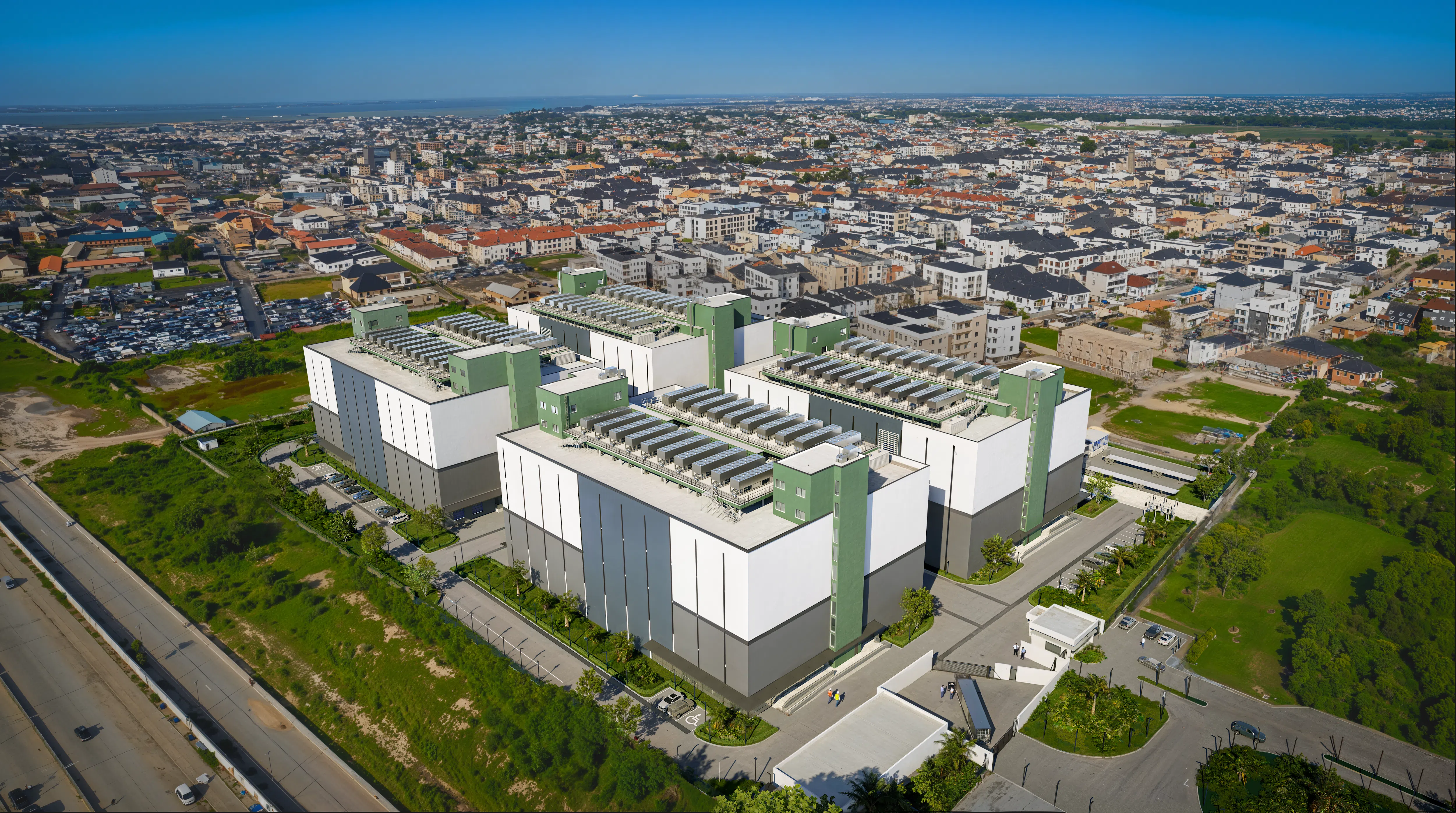
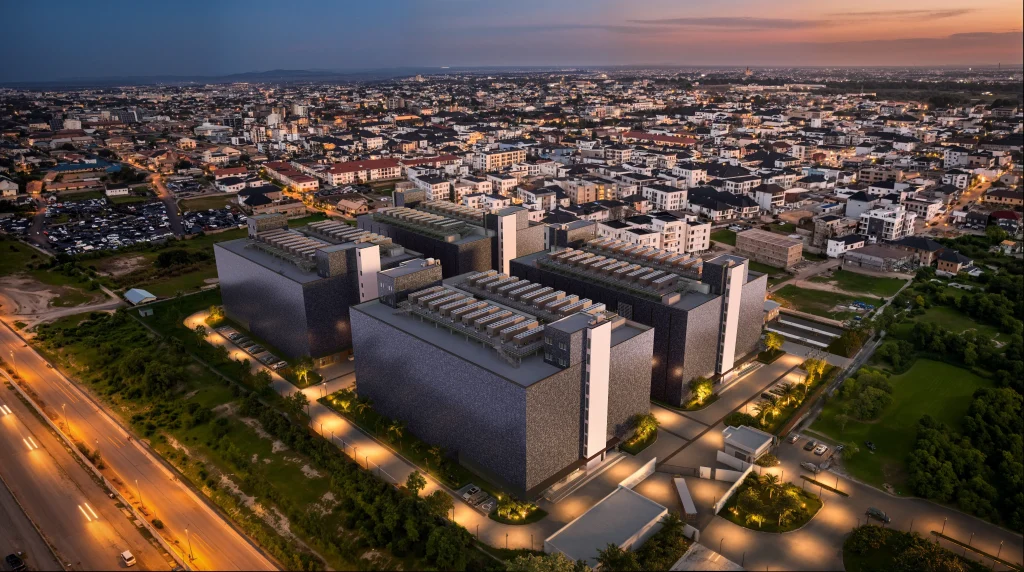
Give each audience a version of the facility they can evaluate before it exists. An anchor tenant walks their future suite, a capital partner sees the campus at full scale, and the leasing team carries one consistent asset from the first meeting to the signed lease. That is what a still image and a spec sheet cannot do.
The asset works in three moves. A cinematic film and photoreal CGI open cold conversations with tenants and funds. An interactive walkthrough lets a tenant’s engineers read the power, cooling, and density design at real scale, turning “we think it fits” into “we can see it fits.” A digital leasing gallery then holds available suites, megawatts, and status on one link the tenant’s committee returns to. The full mechanics of that pipeline, how a CAD or BIM model becomes a walkable scene and how pre-lease visualization differs from an operational monitoring view, are covered in the 3D data center visualization and 3D data center model guides.
One line has to stay clear. This is the marketing and leasing layer, not operational infrastructure management. It makes the power path, the cooling design, and the rack density legible so a tenant can read what the project’s engineers specified. It does not run computational fluid dynamics, thermal analysis, or live capacity monitoring. Those belong to the operational digital twin, a separate tool built after the facility opens, and a marketing partner that blurs that line is overselling.
How to Measure Whether Your Data Center Marketing Is Working
Track the leasing funnel, not vanity traffic. The metrics that decide whether a campus reaches financial close are qualified tenant tours, letters of intent and signed leases, the preleased percentage of the campus, and the time it takes to get there. Everything else is a leading indicator for those.
Leading indicators tell you the program is reaching the right rooms: site-selection teams engaging the walkthrough and the data room, requests for information and proposals, and meetings with capital partners. A gallery tied to a CRM turns those into evidence, showing which tenant reviewed which suite and how often, so the leasing team knows when an opportunity is ready to advance. Interest that never opens the walkthrough or the data room is not yet a qualified tour.
The lagging metrics are the ones a lender cares about. Megawatts committed, the preleased share of the campus, and time-to-financial-close are what convert a program into a construction loan. The market benchmark sets the bar: with primary-market capacity running 80.4% preleased before completion, the target is not a handful of interested parties. It is a committed share high enough to close the financing that lets construction start.
How to Choose a Data Center Marketing Partner
Look for three things: a partner that produces the conversion asset in-house, covers the full pre-lease stack, and is honest about scope. When one team makes the CGI, the walkthrough, and the leasing gallery, visual consistency is structural rather than a revision cycle, and the campus a tenant sees in the film is the campus they walk in the gallery.
Two more criteria separate a leasing-grade partner from a vendor of parts. Speed, because a leasing gallery that lands in weeks reaches tenants inside the financing window, not after it, and range, because an operator who buys visualization, a website, and a brand from one studio replaces three vendors and the coordination tax between them. Add fluency in the actual audience, a partner that markets to site-selection teams and capital partners rather than one that repurposes an agent playbook or a generic B2B funnel, and the shortlist gets short fast.
Where Fortes Fits: The Pre-Lease Marketing Layer, Built in One Studio
Marketing.Fortes.Vision builds the marketing and pre-lease layer as one studio, in-house, so data center operators pre-lease capacity and raise capital before the slab is poured. That layer is photoreal CGI, cinematic animation, an interactive real-time walkthrough, a digital sales gallery, a developer website, and the brand that ties them together. It is the one studio that replaces three vendors: a CGI studio, a web agency, and a branding designer.
The mechanism is what makes the speed possible. Because the renders are produced in-house, the leasing gallery is built directly from them, so visual consistency between the CGI and the sales tool is structural, not a coordination cycle. The leasing gallery ships in 5 weeks. When an operator supplies an existing 3D model, Fortes integrates it into a finished environment at a lower rate, so the path from geometry to a leasing asset is faster and cheaper the more the operator brings. The whole system is one pre-construction marketing system, not a set of disconnected deliverables.
Marketing.Fortes.Vision builds the experiential and marketing layer, not operational infrastructure management. There is no computational fluid dynamics, thermal, power, or cooling simulation here, because a data center operator needs both layers, for different reasons, from different partners. Pricing is scoped to the site, at higher-end production quality on a mid-market budget: as a reference, campus CGI views typically start around $1,200–$2,500 each, additional angles within an existing scene around $450–$540, and an interactive real-time walkthrough runs from about $20,000 for a single building into six figures for a large complex. Exact numbers depend on the campus, the asset set, and the timeline.
Capacity is filled before the concrete is scheduled, and the operator who lets tenants and investors walk the campus first is the one who signs the anchor lease first, and reaches financial close while the power queue is still moving.